
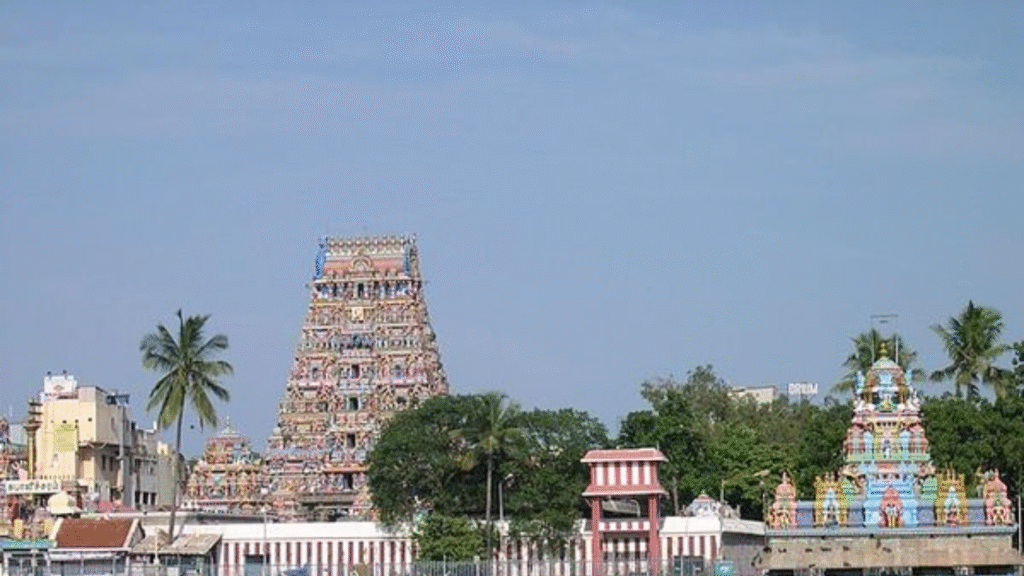
The Kapaleeshwarar Temple in Chennai is one of the most iconic and historically significant temples of South India. Located in the vibrant neighborhood of Mylapore, this ancient shrine is dedicated to Lord Shiva, worshipped here as Kapaleeshwarar, and his consort Goddess Parvati, known as Karpagambal. The temple is not only a spiritual destination but also a cultural symbol of Chennai, reflecting centuries of devotion, Dravidian architecture, and traditional Tamil practices.
| Temple Name | Kapaleeshwarar Temple |
| Location | Mylapore, Chennai, Tamil Nadu |
| Deity | Lord Shiva (Kapaleeshwarar) and Goddess Parvati (Karpagambal) |
| Built By | Originally by Pallavas (7th century CE), rebuilt by Vijayanagara kings (16th century CE) |
| Architecture Style | Dravidian architecture with towering gopurams, mandapams, and temple tank |
| Notable Features | 120-feet Rajagopuram, temple tank, bronze idols for processions, inscriptions, and intricate sculptures |
| Legend | Goddess Parvati performed penance in the form of a peahen (Mayil), leading to the name Mylapore (town of peacock) |
| Festivals | – Panguni Peruvizha (grand chariot festival, 10 days)- Arupathumoovar procession- Navaratri- Karthigai Deepam- Shivaratri, Vinayaka Chaturthi, Vaikasi Visakam |
| Cultural Significance | Hub for Carnatic music, Bharatanatyam dance, and Tamil religious traditions; linked to 63 Nayanmars |
| Temple Tank | Kapaleeshwarar Tank – used for rituals and during festivals |
| Best Time to Visit | Panguni Peruvizha (March–April) for grand celebrations; early mornings/weekday visits for peaceful darshan |
| Dress Code | Traditional/Modest attire recommended |
| Nearby Attractions | Santhome Cathedral, Marina Beach, Parthasarathy Temple, Luz Church |
| Special Belief | Worshipping Kapaleeshwarar removes obstacles, while Karpagambal fulfills wishes like a celestial wish-giving tree |
Historical Background
The origins of the Kapaleeshwarar Temple date back to the 7th century CE, during the reign of the Pallavas. However, the present structure was rebuilt in the 16th century by the Vijayanagara rulers, as the original temple is believed to have been destroyed by foreign invasions.
The temple derives its name from a beautiful legend. According to mythology, Goddess Parvati once performed penance in the form of a peahen (Mayil in Tamil) to seek the blessings of Lord Shiva. Hence, the area came to be known as Mylapore (the town of the peacock), and the deity was revered as Kapaleeshwarar. This legend explains why the temple holds strong significance for devotees of the Shaivite tradition.
Architectural Splendor
The Kapaleeshwarar Temple is a prime example of Dravidian architectural style, characterized by intricately carved gopurams (towering gateways), pillared halls, and detailed stone sculptures. The eastern Rajagopuram of the temple rises to a height of around 120 feet and is adorned with colorful sculptures of deities, celestial beings, and mythological scenes.
The temple’s layout includes the sanctum sanctorum (garbhagriha) of Lord Kapaleeshwarar, the shrine of Goddess Karpagambal, and several sub-shrines dedicated to deities like Lord Murugan, Vinayaka, Dakshinamurthy, and Nataraja. The Mandapams (halls) are often used for religious discourses and cultural performances, adding to the temple’s spiritual vibrancy.
One of the most striking features is the bronze idols used during processions, which are excellent examples of Tamil craftsmanship. The temple tank, known as the Kapaleeshwarar Tank, is also a significant part of the complex, and it plays a central role during major festivals.
Spiritual Significance
Devotees believe that praying to Lord Kapaleeshwarar removes obstacles and grants spiritual growth, while Goddess Karpagambal is worshipped as the divine mother who fulfills the wishes of her children, much like the celestial Kalpavriksha (wish-fulfilling tree).
The temple is also associated with the 63 Nayanmars (Shaivite saints), especially Thirugnana Sambandar, who composed devotional hymns in praise of Kapaleeshwarar. These hymns are preserved in the Tevaram, one of the earliest collections of Tamil devotional poetry.
Festivals and Celebrations
The Kapaleeshwarar Temple is known for its grand festivals, which attract thousands of devotees and tourists from across the world.
- Panguni Peruvizha (March–April): This is the most important festival, celebrated for 10 days. The highlight is the Ratha Yatra (chariot procession), where beautifully decorated wooden chariots carrying the deities are pulled through the streets of Mylapore. The festival concludes with the Arupathumoovar procession, where the bronze idols of 63 Nayanmars are taken out in a grand display of devotion.
- Navaratri: Dedicated to Goddess Karpagambal, this festival sees elaborate rituals, music, and cultural programs.
- Karthigai Deepam (November–December): Thousands of oil lamps are lit, creating a mesmerizing sight.
- Vinayaka Chaturthi, Shivaratri, and Vaikasi Visakam are also celebrated with grandeur at the temple.
These festivals are not just spiritual events but also vibrant cultural gatherings that showcase Carnatic music, Bharatanatyam dance, and traditional Tamil art forms.
Cultural Importance
The Kapaleeshwarar Temple is deeply intertwined with Tamil culture and heritage. It has been a hub for religious discourses, classical music concerts, and traditional dance performances for centuries. Many renowned Carnatic musicians and Bharatanatyam dancers have performed in its precincts during festivals, making it a living space for art and spirituality.
The temple’s presence in Mylapore also adds to the cultural richness of the locality, which is dotted with old houses, traditional markets, and food stalls serving authentic South Indian delicacies.
Visiting the Temple
The Kapaleeshwarar Temple is easily accessible as it is located in the heart of Chennai. Visitors can enter through its magnificent gopurams and immerse themselves in the spiritual aura of the sanctum. Photography is restricted inside the temple, which helps preserve its sanctity.
The best time to visit is during Panguni Peruvizha, when the temple and its surroundings come alive with celebrations. However, for those seeking a quieter spiritual experience, weekdays and early mornings are ideal.
Devotees and tourists alike are advised to dress modestly as a mark of respect to the temple’s traditions. The temple also provides prasadam, a sacred offering distributed to devotees.

